Best Start in Life - Screen Time Guidance Resources

Written by ArturPysz on Monday 30th March 2026

On Friday 27 March, the government published new, evidence-informed guidance to help parents and carers of children under 5 navigate screen time.

Digital screens are now a normal part of family life. The early years are however critical for development - 90% of a child’s brain development occurs by age 5, making it a critical period for the development of social, emotional and cognitive skills.

The advice is informed by recommendations from an expert panel and has also been developed with parents. It is designed to provide practical, clear and straightforward advice to help families make informed choices that support their child’s development during the years that matter most. 

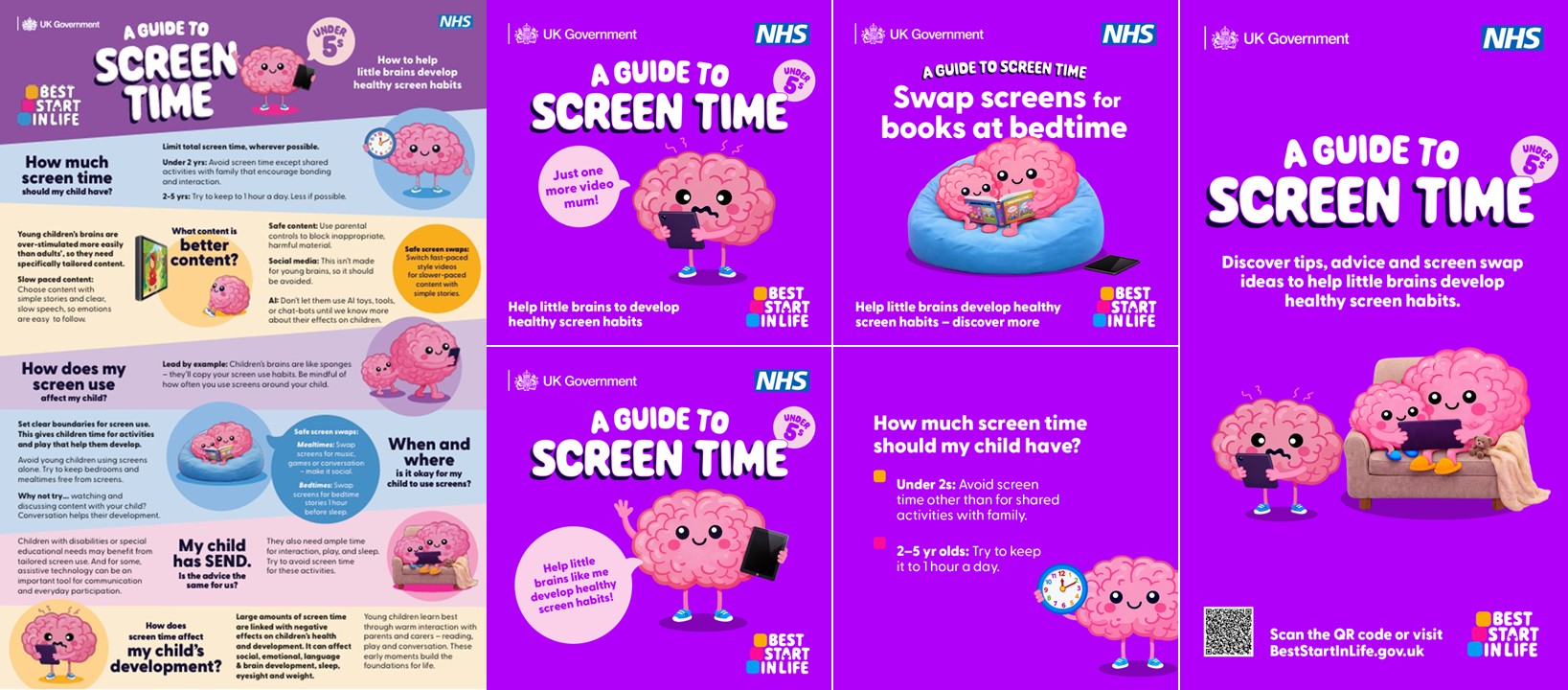
To support partners wishing to promote this campaign and the new guidance, we have created a suite of resources including a comms toolkit, social assets, digital screens and an infographic. This is available for download on the Campaign Resource Centre.


Download here


Some of the key recommendations for parents include:

  • Avoid screen time for under 2s and for 2-5 years, try to keep it to no more than an hour a day.
  • Choose slow-paced, predictable content as this is better for young brains. Fast-paced, over-stimulating social media-style videos may affect how young children learn to concentrate, so it’s best to avoid them.
  • Avoid young children using screens alone as it reduces opportunities for social time and active play.  Try watching and discussing content together with your child as it supports their development and helps you protect them from harmful content.
  • Swap out screens at bedtime or mealtimes for reading stories or playing simple games.
  • Children copy everything you do – their brains are like sponges. Be mindful of how often you use screens around your child.

The advice is available for parents to access on the Best Start in Life website, alongside a whole range of other free resources and advice on everything from pregnancy to starting school. The full expert panel independent report, which this advice is informed by is available on GOV.UK.